
In 2019, bidding for a mid-size tech company’s rebrand required a war room. You needed a creative director, two art directors, a copywriter, a strategist, and a pitch deck that took six weeks to assemble. Last month, a fintech startup awarded their $40,000 rebrand and website build to a 26-year-old working out of a converted garage in Lisbon. She didn’t have a team. She had a tech stack.
We are watching the rapid emergence of the solo studio—a one-person operation capable of delivering agency-grade campaigns, branding systems, and interactive platforms. This isn’t just a new flavor of freelancing; it’s a structural shift in how creative production is valued and executed. A new wave of designers is quietly proving that one hyper-equipped person can now do what twenty used to.
The Collapse of the Assembly Line
The traditional agency model thrived on the assembly line: account managers, strategists, copywriters, art directors, designers, and developers. Each step added time, meetings, and billable hours. It was a system designed to solve a logistical problem: no single human could handle the entire breadth of a campaign’s execution.
Today, that assembly line has been compressed into a single workstation. The friction of handoffs—where a designer’s vision gets lost in translation to a developer, or a strategist’s brief gets diluted by the time it reaches the art director—has vanished. The solo operator holds the context from the initial client call to the final pixel push. This results in work that isn’t just faster, but often more conceptually cohesive.
The Tech Stack of the Solo Studio
How does one person replace an entire department? Through ruthless automation and a carefully curated tech stack. The modern solo designer doesn’t just use software; they orchestrate it.
- Design & Prototyping: Framer and Webflow have completely erased the line between design and development. A designer can ship a production-ready, SEO-optimized site without writing a line of React.
- Ideation & Assets: Midjourney and Stable Diffusion generate moodboards, textures, and custom imagery in minutes. Runway handles motion graphics and video editing that used to require a dedicated post-production team.
- Backend & Automation: Airtable acts as the database, while Zapier and Make string together workflows that automatically update client dashboards, send invoices, and route feedback.
- Client Communication: Loom and Notion replace the endless status meetings, allowing the designer to communicate asynchronously and keep clients in the loop without losing a half-day to conference calls.
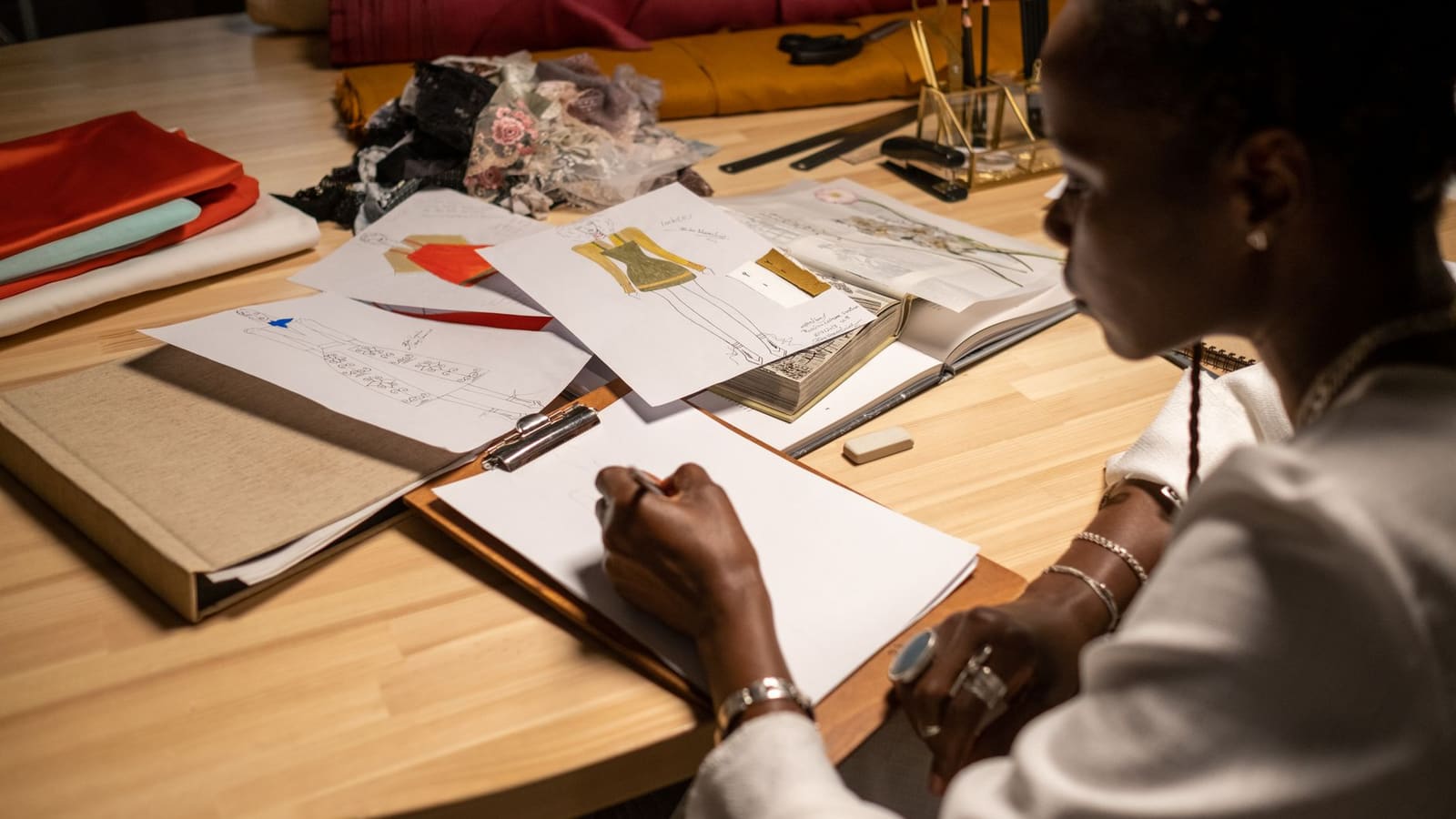
The solo designer is no longer just a pixel pusher; they are a systems architect. They spend less time drawing and more time directing the outputs of their tools.
The Economics of One
Let’s talk about the math. A traditional agency has massive fixed costs: office space, health insurance, payroll for non-billable staff, and the endless cycle of hiring and training. A solo studio has almost none of this.
When a one-person shop charges $15,000 for a brand identity and website that an agency would bid at $80,000, the solo designer often takes home more actual profit than the agency does on the same project. The overhead is practically zero. This allows solo operators to outcompete agencies on price while maintaining healthy margins, fundamentally changing the unit economics of creative work.
“We spent decades optimizing the creative assembly line, making it faster and more efficient. But the ultimate optimization is removing the line entirely. When one person holds the context from strategy to final pixel, the work isn’t just faster—it’s more honest.”
This economic reality is forcing agencies to compete on a playing field they aren’t built for. Clients, especially startups and mid-market companies, are realizing they don’t need to buy a agency’s overhead anymore. They just need the output.
The Limits of the Lone Wolf
But there is a catch. The solo studio is a machine for doing, not necessarily for thinking out loud. The traditional agency model, for all its bloat, contained a crucial element: human friction. The argument between the copywriter and the art director. The strategy session where a bad idea was killed before it could breathe.
A single designer, no matter how talented, operates in an echo chamber. They are simultaneously the director and the janitor. This leads to inevitable bottlenecks. If the designer gets sick, the studio stops. If a project requires a massive scale-up—say, a global rollout across 12 markets with localized photography and video—the solo operator hits a wall. You can automate tasks, but you cannot automate taste, and you cannot automate the serendipity of a genuinely collaborative room.
There is also an emotional toll. Running a solo studio means being the sales team, the project manager, the creative director, and the production staff. Burnout is the silent killer of the one-person studio. The very tools that give these designers superpowers also tether them to their screens with an expectation of impossible turnaround times.
The End of the Team as We Knew It
The solo studio era isn’t about replacing agencies entirely. It’s about forcing a radical specialization. The agencies that survive will be the ones that do the things a single person fundamentally cannot: massive orchestration, deep ethnographic research, and multi-market strategy.
Everything else—the logos, the landing pages, the social campaigns, the brand films—is migrating into the hands of the hyper-equipped individual. The creative team is no longer defined by how many people sit at the table, but by how much leverage one person can command from their chair. We used to scale creative teams by adding headcount. Now, we scale them by adding tools.