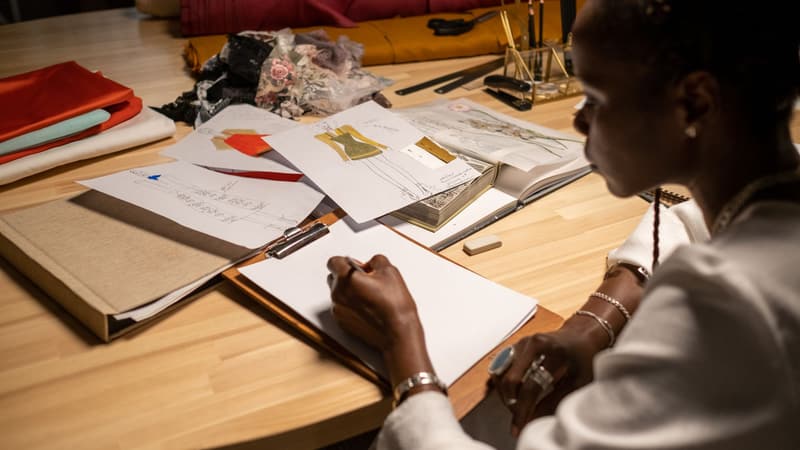

At 2:00 AM in a dimly lit studio in Brooklyn, digital illustrator Yuki Okada powers down her 24-inch Wacom Cintiq. The glowing surface goes black, erasing the vibrant colors of the client commission she’s been rendering for the past six hours. Then, she reaches past the stylus and the express keys, pulls a battered, cloth-bound Stillman & Birn sketchbook from a drawer, and uncaps a Sakura Pigma Micron pen.
She isn’t doing this for the aesthetic. She’s doing it because she no longer trusts the screen.
For decades, the migration from paper to pixels was framed as an inevitability of the modern creative career. Tablets got better, software got smarter, and the undo button became the most valuable tool in an artist’s arsenal. But the ground has shifted. We are now in an era where generative models can ingest a lifetime of brushstrokes in seconds, perfectly mimicking a creator’s style without their consent. In response, a growing vanguard of digital artists are quietly reverting to physical sketchbooks for their earliest, most vulnerable ideation. They are building a paper cache—a private creative space the algorithm cannot reach.
The Screen is a Two-Way Mirror
The catalyst wasn’t a single event, but a compounding realization. Over the last two years, artists discovered that the digital environments they relied on were no longer passive tools. They were observation decks. From the uproar over Midjourney and Stable Diffusion’s massive, unauthorized scraping operations to the panic surrounding Adobe’s ambiguous terms of service regarding Creative Cloud data, the message was clear: if your work exists on a hard drive synced to the internet, it is potentially fodder for a machine.
For digital artists, this created a unique paranoia. Traditional painters could hide their canvases in a closet, but a digital artist’s entire workflow—from rough thumbnails to color studies—often lives in the cloud. The anxiety isn’t just about finished masterpieces; it’s about the raw, ugly, experimental phases of creation.
If an algorithm scrapes a polished final piece, it copies a style. If it scrapes the messy process, the false starts, and the structural skeletons of an idea, it learns the underlying logic of the artist’s mind.
The Anatomy of an Analog Firewall
The paper cache is, at its core, a deliberate reintroduction of friction. By moving the initial ideation phase offline, artists are forcing a disconnect between their imagination and the network.
The workflow looks remarkably like it did in the late 1990s, albeit with a modern boundary drawn around it:
- Ideation and Thumbnails: Drawn exclusively in physical sketchbooks, often using fountain pens or archival markers that cannot be erased.
- Value Studies and Color Mapping: Done with watercolor or Copic markers on paper, kept entirely offline.
- The Digital Bridge: Only the final, refined sketch is scanned or photographed and imported into Procreate or Photoshop for rendering.
The choice of materials has become highly specific. Artists are seeking out paper that forces commitment. Leuchtturm1917 notebooks for brainstorming; Tomoe River paper for ink; Strathmore bristol for heavier physical mark-making. The lack of an “undo” function (Ctrl+Z) is no longer viewed as a limitation—it is a security feature. You cannot accidentally upload a physical page to a server. You cannot inadvertently opt-in a Moleskine to a training dataset.
The Value of the Unscrapable
Beyond the practicalities of data privacy, this analog reversion is sparking a psychological renaissance for creators. The digital workspace is inherently performative. Even if no one is watching, the existence of platforms like ArtStation and Instagram means artists often draw with the final, shareable image in mind.
When the sketchbook is strictly offline, the pressure evaporates.
“The algorithm only learns from the art you allow it to see, but it can never learn how you think. The sketchbook is the last place where an artist can have a bad idea in total privacy. When you remove the cloud, you remove the audience. That is where true risk lives.”
This privacy allows for the kind of grotesque, absurd, and structurally unsound experiments that eventually lead to innovation. A machine learning model is designed to predict the most statistically likely, aesthetically pleasing outcome based on past data. It cannot process a visceral, frustrating, and entirely unmarketable sketchbook page. The unscrapable failure is a distinctly human luxury.
The Pencil is Mightier Than the Prompt
There is a quiet defiance in this movement. It is not a wholesale rejection of technology; the artists employing this method still spend the majority of their hours in Clip Studio Paint or Adobe Fresco. Rather, it is a reclamation of authorship.
By keeping the genesis of an idea offline, artists are ensuring that the most valuable part of their practice—their conceptual foundation—remains their own intellectual property. The final, rendered artwork might still be scraped, but it will be a hollow shell. The machine will never see the blueprints.
As Okada finishes her late-night sketch, she runs her thumb over the indented grooves of the pen on the thick paper. The ink is wet, the idea is raw, and for now, it belongs entirely to her. Tomorrow, she will scan it, turn on the Wacom, and step back into the light of the digital world. But tonight, the cache is secure. The algorithm will have to wait.