
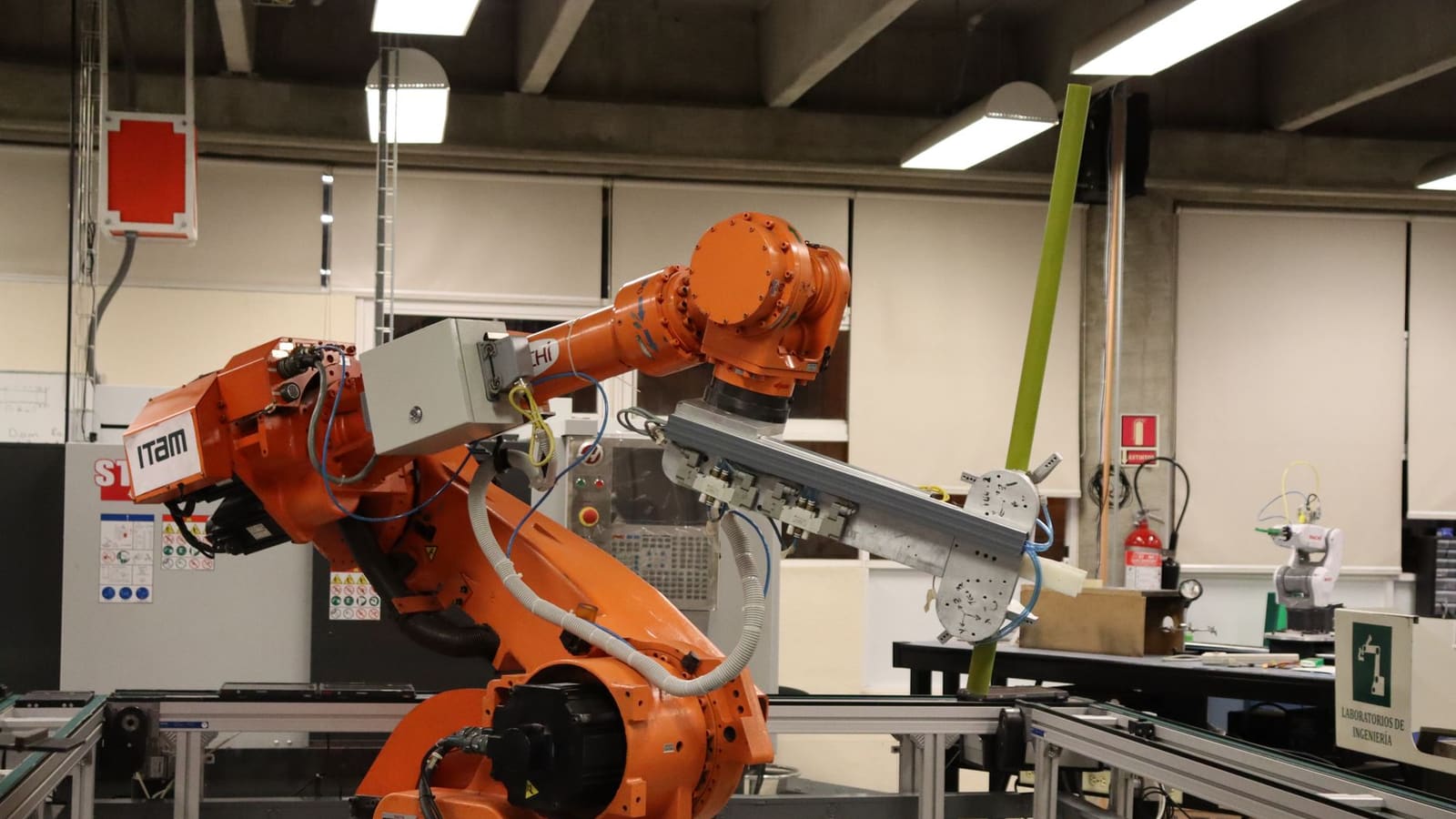
At 3:00 AM in a laboratory at the University of Toronto, the lights are off, but the work is frantic. A robotic arm glides across a grid of vials, aspirating a precise microliter of blue fluid. It dispenses the liquid into a micro-reactor, triggers a spectrometer, and logs the results into a cloud database. A machine learning algorithm instantly processes the data, decides what to mix next, and updates the robotic arm’s queue. No human is present. No one is drinking cold coffee or fighting off sleep. This is a self-driving laboratory, and it is quietly rewriting the rules of scientific discovery.
For decades, the pace of materials science and chemistry has been throttled by human endurance. The traditional model relies on the “pipette jockey”—often an overworked graduate student running variations of an experiment, one painstaking step at a time. It is a process that is slow, prone to human error, and incredibly expensive in terms of human potential. But over the last few years, a quiet revolution has taken hold in elite research institutions. Autonomous labs are taking over the grunt work, compressing months of trial-and-error research into mere hours.
The End of the Pipette Jockey
The shift began when researchers realized that simply using machine learning to predict chemical properties wasn’t enough; the models were only as good as the data they were trained on, and generating that data required endless hours of manual labor. The solution was to close the loop.
At the Acceleration Consortium at the University of Toronto, led by Alán Aspuru-Guzik, autonomous platforms like Chemspeed and Symyx are being integrated with artificial intelligence to create what researchers call the “closed-loop discovery engine.” The robot doesn’t just follow a pre-programmed script. It acts as the hands, while the AI acts as the brain.
Instead of a human formulating a hypothesis and testing it, the human sets a goal. For example: find a non-toxic organic molecule that improves the efficiency of a flexible solar cell. The AI then navigates the vast, unmapped territory of “chemical space”—the billions of possible molecular combinations—and selects the most promising candidates to synthesize.
The Closed-Loop Discovery Engine
To understand how drastically this changes the timeline of innovation, look at how an autonomous lab actually operates. The process breaks down into a continuous, automated cycle:
- Prediction: The AI algorithm uses quantum chemistry calculations and previous experimental data to propose a new material or molecule that meets the researcher’s criteria.
- Synthesis: A robotic platform prepares the sample, handling dangerous solvents and precise measurements with superhuman accuracy, operating safely in the dark.
- Characterization: Automated analytical instruments (like mass spectrometers or X-ray diffractometers) test the newly synthesized material, measuring its physical and chemical properties.
- Feedback: The results are fed back into the AI. The algorithm learns from the failures and successes, updates its predictive model, and immediately proposes the next experiment.
This loop runs continuously, twenty-four hours a day, seven days a week. In 2023, researchers at the Acceleration Consortium used an autonomous lab to discover several new materials for capturing carbon dioxide from the atmosphere. What would have taken a human team years of methodical synthesis took the SDL less than a week.
From Hypothesis to Serendipity by Algorithm
This isn’t just an upgrade in laboratory efficiency; it represents a fundamental epistemological shift in how we make discoveries. The traditional scientific method is deeply rooted in hypothesis-driven research: a human forms an idea based on existing knowledge and designs an experiment to prove or disprove it.
Self-driving labs lean heavily into data-driven discovery. The AI isn’t bound by human intuition or the prevailing theories of the day. It can suggest combinations of elements that a seasoned chemist might dismiss as improbable, simply because the AI sees a subtle pattern in the high-dimensional data that human minds cannot visualize.
“The scientific method hasn’t changed, but the timescale of its iteration has collapsed from months to minutes. We are no longer limited by human endurance, but by human imagination.”
When a robot mixes an unlikely cocktail and discovers a highly stable, biodegradable plastic, we are forced to reverse-engineer the “why.” The discovery comes first, and the theoretical explanation follows. Serendipity, long a romanticized element of scientific breakthroughs from penicillin to Teflon, is now being manufactured by algorithm.
The New Bottlenecks
If the physical labor is no longer the bottleneck, where does the friction in scientific discovery now lie?
First, there is the cost of entry. A fully equipped self-driving laboratory can cost millions of dollars, putting it out of reach for all but the most well-funded universities and corporate R&D departments. This threatens to create a new kind of scientific divide, where elite institutions pump out discoveries at breakneck speed while smaller labs are left behind, relying on traditional, slower methods.
Second, there is the “black box” problem. If an AI discovers a new catalyst for green hydrogen production but cannot explain why the molecular structure works, have we actually advanced scientific understanding, or just our engineering capabilities? The risk is that we amass a library of highly effective materials without the underlying theoretical framework to truly understand them.
Finally, the bottleneck has shifted to human ingenuity in a different sense. The researchers who will thrive in this new era are not the best chemists, but the best choreographers—those who can frame the right questions, design the right fitness functions for the AI to optimize, and interpret the deluge of data that flows out of the darkened labs.
The Unmanned Frontier
We tend to romanticize scientific discovery as a distinctly human act—a lone genius having a eureka moment in a shower, or a team of researchers cheering as a needle finally moves. The reality of the next century of discovery will be decidedly less cinematic. The breakthroughs will happen in locked rooms, illuminated only by the LEDs of robotic arms and server racks.
The self-driving laboratory forces us to accept a strange new reality: the most prolific scientists of the future might not need to wear lab coats at all. They will simply set their parameters, turn off the lights, and let the machines search the dark for the materials that will build our future.