

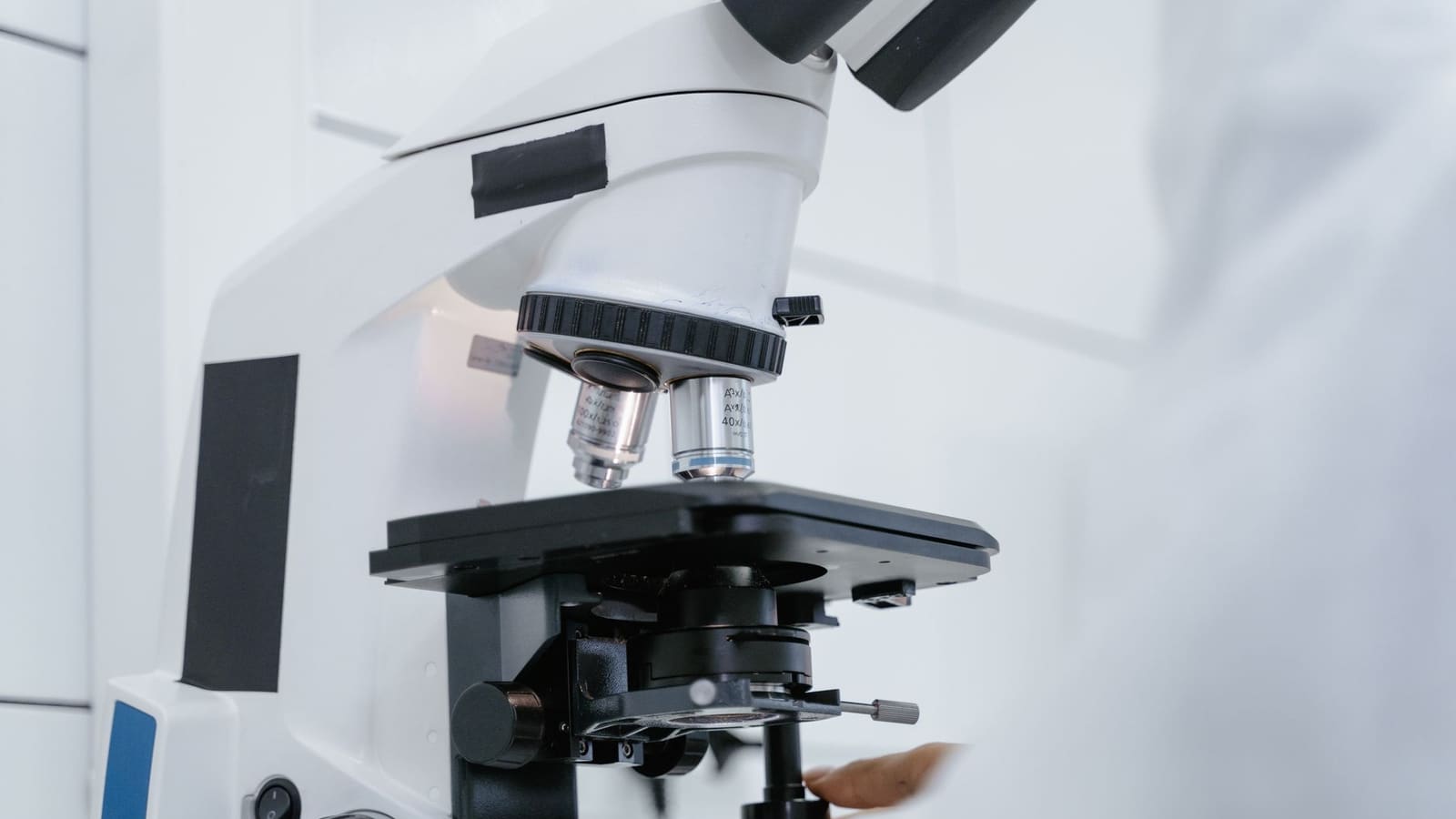
In a cramped apartment in Lagos, a 26-year-old biochemistry graduate named Oluwaseun Shorinola peered into a homemade microscope built from a webcam, a 3D-printed frame, and a handful of cheap optical components. On his screen, the stained red blood cells of a local malaria patient snapped into focus. The instrument had cost him roughly $50 to assemble. The commercial equivalent—a laboratory-grade fluorescence microscope—would have run upwards of $20,000, a sum his underfunded university department couldn’t dream of allocating.
Shorinola is not an anomaly. He’s part of a sprawling, loosely organized movement of makers, hackers, independent researchers, and under-resourced scientists who are quietly dismantling one of science’s most stubborn barriers: the cost of seeing.
The Open Hardware Insurgency
For decades, laboratory equipment has operated on a business model that mirrors the pharmaceutical industry—high development costs recouped through eye-watering markups, protected by proprietary designs and closed software ecosystems. A basic pipette can cost $300. A centrifuge, $2,000. A confocal microscope? Don’t ask. This pricing structure has always carried a quiet assumption: that serious science belongs to institutions wealthy enough to outfit it.
The open-source hardware movement has been chipping away at that assumption for over a decade, but the last five years have seen an acceleration that’s hard to ignore. The catalysts are familiar—cheaper 3D printers, the proliferation of single-board computers like the Raspberry Pi, and online communities where schematics are shared as freely as recipes.
What’s changed is the ambition. We’re no longer talking about hobbyist novelties. These are instruments producing publishable data.
Consider the OpenFlexure Microscope, developed at the University of Bath by a team led by Richard Bowman. It’s a fully automated, research-grade optical microscope that can be built for under $200. Its mechanical stage—normally a precision-machined component costing hundreds alone—is 3D-printed with a flexure mechanism that achieves sub-micron positioning. The designs are open, documented exhaustively, and have been downloaded and assembled in laboratories across Kenya, India, the Philippines, and beyond.
Or take the OpenPCR, an open-source thermocycler that democratized DNA amplification when it launched. The commercial machines it competes with cost $3,000 to $10,000. The OpenPCR kit? Around $600. It runs on open software, connects to a laptop, and does the same job.
Why This Matters Beyond the Price Tag
The obvious story here is economic—cheaper tools mean more people can do science. But the deeper story is about who gets to ask questions.
When a piece of equipment costs $20,000, it comes with a gatekeeper. Usually a university procurement office, a grant committee, a department head deciding whose research deserves investment. The equipment becomes a bottleneck through which only certain kinds of inquiry pass. Research that serves commercial interests, research that aligns with institutional priorities, research that satisfies funding bodies—all of it gets fast-tracked. Everything else waits.
Open hardware doesn’t just lower the cost of entry. It removes the gatekeeper entirely.
This matters most in places where the gatekeeper was never going to open the gate. In rural clinics that need to diagnose tuberculosis but can’t import a $15,000 fluorescence microscope. In agricultural communities testing soil microbiology without a university partner. In high school classrooms where a single dissection scope serves forty students.
“The question was never really about whether cheap microscopes could work,” Dr. Bowman told me. “The question was who they were allowed to work for. Once you decouple the instrument from the institution, you’ve changed the power structure of who gets to produce knowledge.”
That power shift is already producing results. Researchers at Makerere University in Uganda have used open-source microscopes to diagnose schistosomiasis in field studies. A team in Bangladesh built their own PCR infrastructure to monitor local waterborne pathogens. These aren’t toy replications of Western science. They’re original inquiries driven by local needs that commercial instrument manufacturers never had incentive to serve.
The Toolkit Taking Shape
What’s emerging is less a single project than an entire parallel infrastructure of science. The pieces are interlocking:
- Imaging — OpenFlexure, the microscope built by Bowman’s team, offers research-grade optics with automated stage control. The FlyPi, built from a Raspberry Pi and off-the-shelf optics, provides fluorescence imaging for under $100.
- Molecular biology — OpenPCR for DNA amplification, OpenDrop for digital microfluidics, and the growing ecosystem of open-source reagent protocols hosted on platforms like Hackteria.
- Fabrication — Open-source centrifuges like the DremelFuge, which attaches to a rotary tool and spins capillary tubes at 35,000 RPM for under $40. Open-source shakers, incubators, electrophoresis rigs.
- Data and software — ImageJ for analysis, open-source lab management tools, and Python libraries that replace proprietary analysis suites costing thousands in licensing fees.
None of these match the polish of their commercial counterparts. A Leica microscope will outperform an OpenFlexure in stability and optical quality. An ABI thermocycler will be more reliable than an OpenPCR. That’s not the point. The point is that the gap between “no instrument” and “good enough instrument” has collapsed from the cost of a car to the cost of dinner.
The Resistance, Both Structural and Real
Unsurprisingly, the movement faces friction. Some of it is practical—open-source instruments lack the validated reliability that peer-reviewed journals and regulatory bodies increasingly demand. A homemade centrifuge that fails mid-spin isn’t just inconvenient; it’s dangerous. Quality control in distributed manufacturing is genuinely hard.
But some of the resistance is structural and revealing. Institutional review boards, grant committees, and journal editors often treat open-source data with suspicion, demanding additional validation that commercially sourced results don’t face. There’s a quiet circular logic at work: open instruments aren’t trusted because they haven’t been validated by institutions that can’t afford to validate them because they can’t afford the instruments.
The FDA and equivalent regulators worldwide have no established pathway for approving diagnostic devices built from open hardware. A clinic in Tanzania using an open-source microscope to diagnose malaria is, strictly speaking, operating outside approved medical practice—even if the diagnosis is accurate.
This is where the movement’s quiet revolution becomes loud. Because the question it forces isn’t really about equipment. It’s about jurisdiction. Who decides what counts as real science? Who certifies truth? When a researcher in Lagos produces valid data on a $50 microscope, and a researcher in Boston produces equivalent data on a $50,000 scope, the only meaningful difference is the apparatus of legitimacy surrounding them.
What Comes Next
The open-source lab movement won’t replace commercial instrument manufacturing. The cutting edge—cryo-electron microscopy, next-generation sequencing, single-molecule imaging—requires capital and engineering depth that garage builds can’t touch. But the cutting edge was never the bottleneck. The bottleneck has always been the middle: the workhorse instruments that do 80% of actual science, everywhere.
That middle is being hollowed out. And what fills the gap won’t look like the laboratories we’re accustomed to. It’ll look like Shorinola’s apartment, like a community workshop in Manila, like a clinic in the Kenyan highlands where a Raspberry Pi hums quietly beside a 3D-printed microscope. Science performed not by credentialed researchers in institutional halls, but by curious people with internet access and the audacity to build their own tools.
The revolution isn’t loud. It’s a focused image on a cheap screen, in a room no grant committee ever visited, answering a question no corporation ever funded.