
There’s a specific sound a mailbox makes when you drop something into it—a small, final clank that means you’ve surrendered control. Whatever you’ve sent will arrive whenever it arrives, possibly damaged, possibly opened by a curious postal worker, possibly rerouted to the wrong state. This is, depending on your temperament, either terrifying or deeply liberating. For a growing community of artists working in the revived tradition of mail art, it’s the entire point.
Mail art—sometimes called correspondence art or postal art—has been around since the 1960s. Ray Johnson, often credited as the movement’s founder, sent collages, drawings, and cryptic notes to friends and strangers through the U.S. Postal Service, eventually building what he called the New York Correspondence School. The practice spread through the Fluxus network and into the Soviet bloc, where it became a lifeline for artists operating under censorship. The rules were simple, almost anti-rules: no jury, no fees, no returns. You sent something; you might get something back. That was it.
What’s remarkable is that this analog, deliberately inefficient practice is now attracting artists who grew up entirely inside the internet—people who have never known a creative landscape without engagement metrics, recommendation algorithms, and the quiet tyranny of optimization.
The Feed Is Exhausted
The case against posting your work online in 2024 is not complicated. Instagram’s feed is a casino floor, engineered to reward content that triggers immediate reaction. An image of a finished painting will underperform a time-lapse video of that same painting, which will underperform a video of someone reacting to the painting. The platform doesn’t want your art; it wants your performance of making art, ideally with a trending audio track underneath it. The work itself is beside the point.
Mail art inverts every assumption the feed operates on. A piece sent through the postal system has no audience counter. There’s no comment section. There’s no algorithm deciding whether to show it to anyone. The recipient is one person, chosen or semi-chosen, and the experience of receiving the work is private, tactile, and completely unmeasurable. You can’t A/B test a postcard.
For artists who have spent years calibrating their output for platforms—learning what times to post, what colors perform well, how to write captions that trigger the algorithm’s interest signals—this is a profound relief. Several practitioners describe the same sensation: the moment you put a piece of mail in the box, the performance anxiety evaporates. There is nothing left to do. No notifications to watch. No engagement to monitor. The art has left your hands.
How the Networks Form
Contemporary mail art networks are small, semi-private, and often organized through a mix of old and new tools. The irony is that artists frequently use Discord servers, Signal group chats, or spreadsheets to coordinate their analog exchanges. The internet is excellent at helping people find each other; it’s terrible at hosting the actual creative exchange. These artists use the former to bypass the latter.
A typical network might work like this:
- A group of 15 to 30 artists agree to exchange work over a set period—three months, six months, a year.
- Each artist sends a piece to one or more participants on a rotating or open schedule.
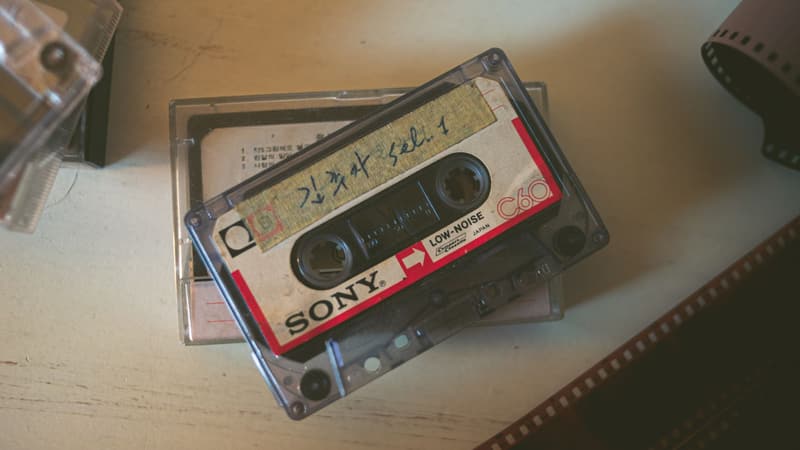
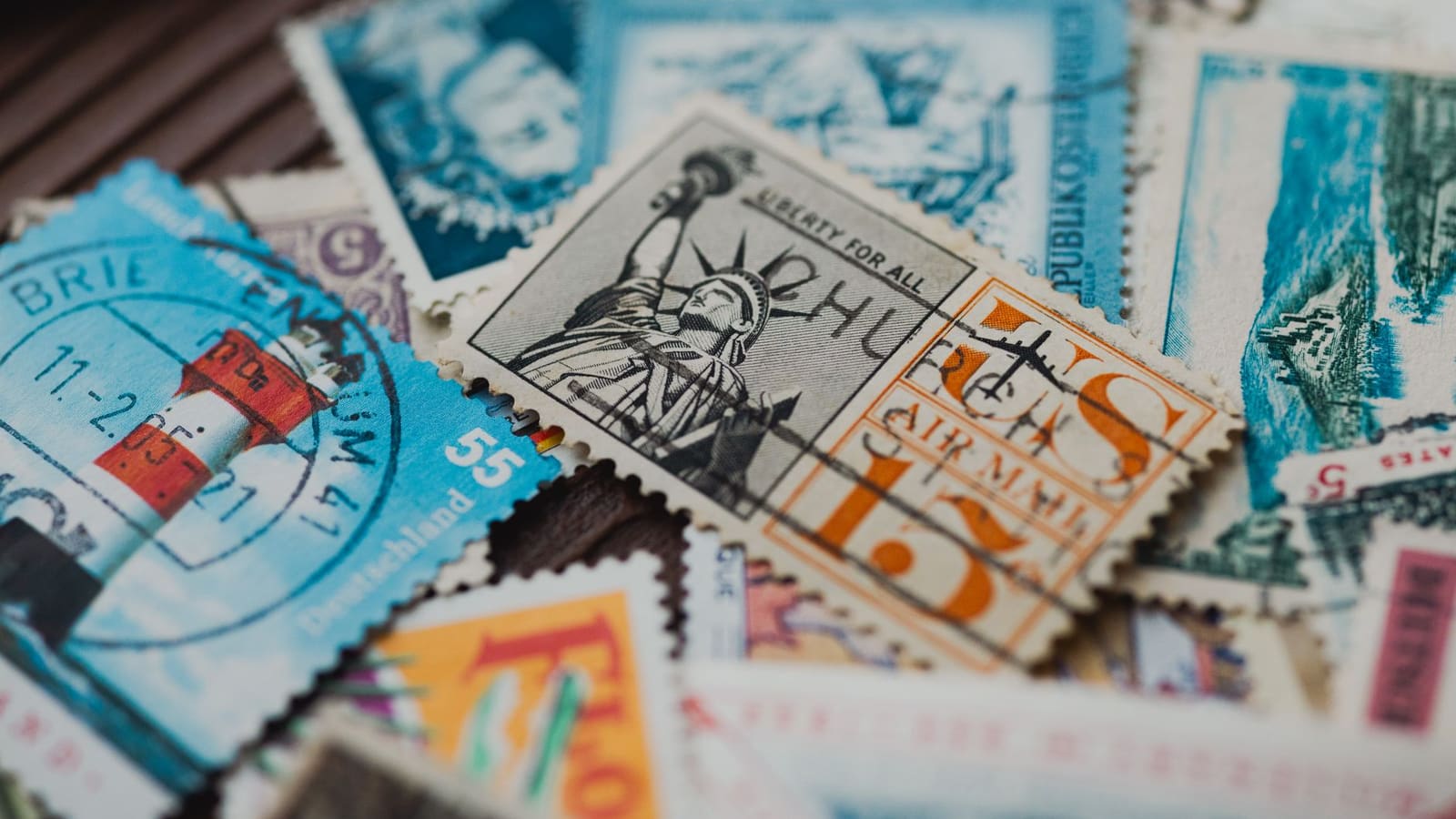
- Formats vary: handmade postcards, zines, collage, altered books, artistamps (fake postage stamps), cassette tapes, small sculptures.
- There’s no central authority. No one grades the work. If someone stops sending, they just stop. The network absorbs the loss.
- Many groups end each cycle with a zine or digital archive documenting what was exchanged, but the archive is secondary. The mail was the thing.
Some networks are thematic—one group focuses exclusively on artistamps, another on political collage, another on text-based art and poetry. Others are deliberately unstructured, organized around nothing more than a shared agreement to send something physical through the mail on a regular basis.
The Material Argument
There’s a materialist argument underneath all of this that’s worth taking seriously. A piece of mail art is an object. It exists in one place, at one time, for one person. It can be hung on a refrigerator, pinned to a wall, stored in a box, lost, damaged, or thrown away. Its existence is contingent and finite in a way that a JPEG uploaded to a server farm in Ashburn, Virginia, is not.
“When you make something for the feed, you’re making it for a system. When you make something for the mail, you’re making it for a person. Those are completely different creative acts, and your brain knows the difference even if you can’t articulate it.” — a mail artist who goes by the handle Postmaster General and requested I not use their legal name
This is the crux of it. The conditions of creation change depending on who you imagine at the other end. An algorithm is not a person. It does not have hands. It will not hold your work up to the light or notice that you used a specific paper stock or smeared the ink slightly with your thumb. Making for the algorithm is making for nobody. Making for the mail is making for somebody, even if that somebody is a stranger you’ll never meet.
What It Costs
Mail art is not free. Stamps cost money. Materials cost money. International postage is genuinely expensive—sending a small package from the U.S. to Europe can run $15 or more. This is a real constraint, and it shapes who participates. The revival is largely populated by artists with enough disposable income to spend $30 to $50 a month on postage and supplies. It’s not exclusive by intention, but it’s exclusive by economics, and pretending otherwise would be dishonest.
There’s also a time cost. Making something by hand, writing a note, addressing an envelope, walking to the post office—this takes longer than posting to a grid. In a culture that has spent two decades optimizing creative output for speed and scale, choosing to be slow and small is a deliberate act. It’s not nostalgia for a pre-digital past. Most of these artists aren’t rejecting the internet; they’re rejecting the specific bargain the internet currently offers creators, which is exposure in exchange for servitude to a ranking system they can’t control and barely understand.
The Quiet Part
The most radical thing about mail art in 2024 is not that it’s analog. It’s that it’s unmeasurable. In an economy that treats attention as currency and visibility as proof of value, making something that will be seen by one person and documented nowhere is almost defiant. There’s no analytics dashboard for a letter. There’s no way to know if it “worked.” You send it and you let go.
That letting go is the practice. Not the collage, not the artistamp, not the handwritten note—though those matter—but the act of releasing work into a system you don’t control, toward a person you may never hear from again, with no promise of return and no metric for success. It’s a small, private rebellion against the idea that everything creative must be counted, ranked, and fed into a machine that decides who deserves to be seen. The mailbox doesn’t decide. It just delivers, or doesn’t, and you move on to the next piece.